Civil unrest
The Running ManCivil unrest names the condition in which accumulated deprivation breaks through the routines meant to contain it. The novel presents it not as an isolated outbreak of irrational violence but as the public surface of poverty, environmental injury, unemployment, medical neglect, and state repression. Private suffering is repeatedly redirected toward spectacle, while any collective response is treated as a threat requiring police force. By the time crowds fight in the street, the conflict has been prepared by years of pressure.
Conditions of Anger
The roots of unrest appear in the domestic crisis surrounding Ben Richards, Sheila Richards, and their sick daughter Catherine Sarah Richards. Catherine’s illness makes ordinary poverty intolerable: Sheila has been trying to manage without proper medical care, while Ben insists that their daughter needs a real doctor and modern equipment rather than a neighborhood midwife. Sheila’s refusal to accept welfare money as a humiliating bounty shows how the system turns family survival into a moral test. The family’s need is genuine, but the available assistance carries the stigma of dependence and leaves them with no dignified choice.
The same pressure is visible in the food and employment systems. At the Games facility, the applicants are given a meal of cornflakes, home fries, scrambled eggs, hard toast, milk, muddy coffee, sugar, salt, and fake butter. Ben Richards eats it because it is his first substantial food in an unknown length of time, yet the meal offers only brute nourishment. He immediately thinks of the help pills and fake milk required at home and wonders when, or whether, the Games will produce money. The promised reward therefore operates against a background in which hunger has already made consent precarious.
Employment offers no stable alternative. After years of searching, Ben Richards finds that jobs have dried up completely. A wealthy drunk offers him ten New Dollars to expose himself as a supposed street freak; Ben knocks him down and runs. The encounter condenses the class structure of the society: the poor man’s body is treated as purchasable entertainment, while resistance to humiliation can be recast as criminality. Civil unrest grows from precisely this conversion of necessity into spectacle and insult.
Pollution, Illness, and Structural Violence
Environmental damage supplies a slower, less spectacular source of unrest. Bradley Throckmorton explains that he and others learned about impurity counts, smog levels, and nose filters through books hidden in a library’s reserve section. They even build a pollution counter from coffee cans and salvaged automobile parts. The knowledge matters because official public life suppresses the history of regulation: an earlier air-pollution scale required factories to close when contamination reached twelve, but the law was rolled back in 1987.
The present conditions are far worse. Bradley says that Boston’s pollution count reaches twenty on a good day, comparable to smoking four packs of cigarettes daily simply by breathing, and can rise to forty-two on a bad day. People collapse from illnesses officially recorded as asthma, while factories continue operating around the clock. The inexpensive nose filters are useless screens with metholated cotton; effective filters made by General Atomics cost six thousand New Dollars and are affordable only to the wealthy. Bradley’s improvised filter for Stacey, made for ten dollars with a component taken from a pawnshop hearing aid, becomes a small act of technical resistance against a system that sells protection from a danger it helps create.
The consequences are concentrated in children and poor families. Cassie, Bradley Throckmorton’s five-year-old daughter, has cancer in both lungs, and the disease has spread into her throat and belly. Her screams and sudden silences continue from the far bedroom while Bradley prepares food, turning the apartment into a chamber where domestic routine and environmental catastrophe coexist. Bradley expects the official record to call her death asthma rather than lung cancer, because acknowledging the disease would expose its political cause. Civil unrest is therefore connected to a struggle over evidence itself: those who suffer must also fight to have the source of their suffering named.
From Private Rage to Public Confrontation
Bradley Throckmorton recognizes the political potential of accumulated anger. He tells Ben Richards that people have been angry for thirty years and need only a reason, repeating the word until Ben falls asleep with it in his ears. The statement does not describe a completed movement; it identifies a volatile population whose frustrations have been contained but not resolved. The Network’s television diversions, including the big-money games watched by frightened applicants, keep people indoors and turn the possibility of their own ruin into entertainment. Viewers watch because next week they may be the contestants, not because the system has become less cruel.
The repression of organized protest supplies a direct historical precedent. Ben Richards later recalls that during the Housewife Massacre, two hundred police armed with tommy guns and high-powered Move-alongs turned back women marching on the Southwest Food Depository, killing sixty of them. He also remembers that protest and violence seemed equally ineffective, and that he had moved through the world asking only for work. This history explains why unrest appears both inevitable and disorganized: lawful protest has been met with mass force, while desperation has been individualized and driven back into the home.
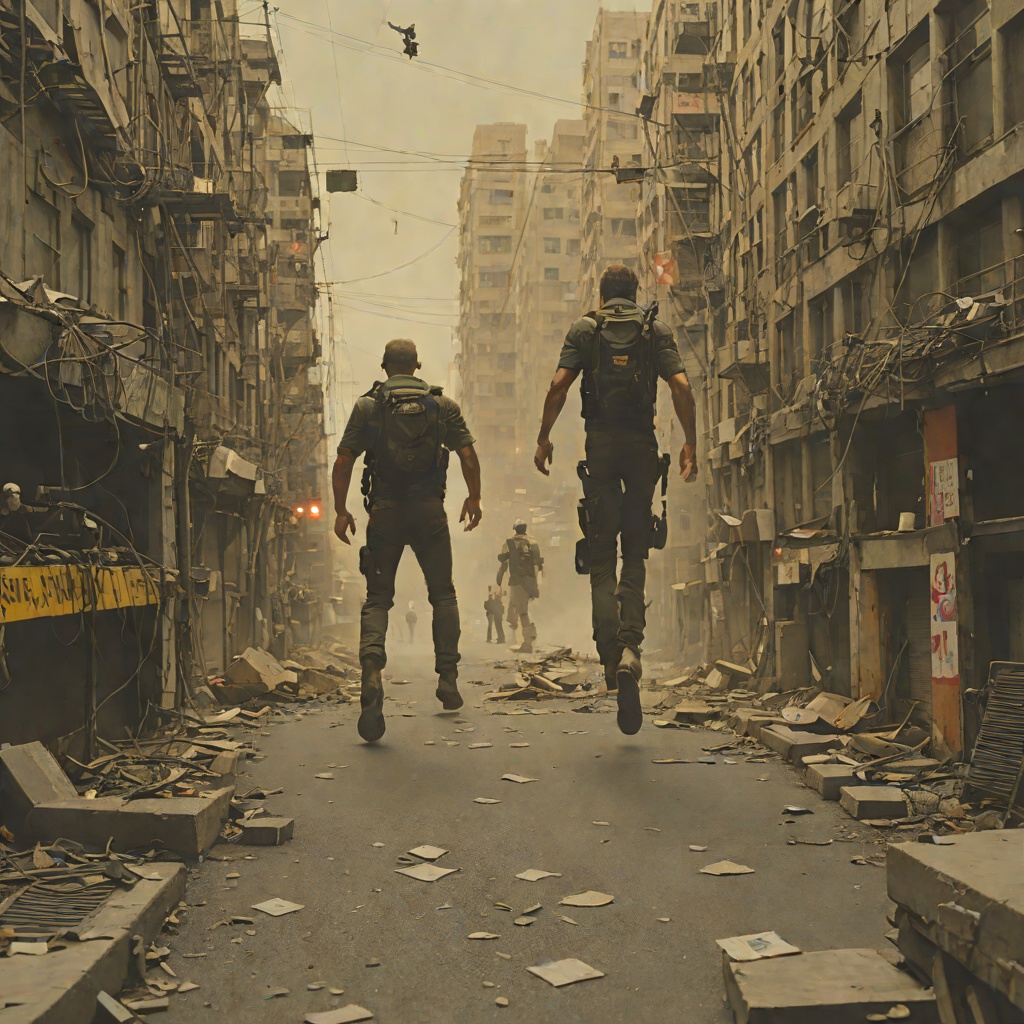
The clearest eruption occurs when Amelia Williams and Ben Richards confront police amid a crowd. A bullhorn orders all civilians to leave, threatening ten years in the state penitentiary, a ten-thousand-dollar fine, or both for obstruction and unlawful assembly. Instead of dispersing, someone shouts that the police merely want privacy to shoot the girl and condemns all pigs. The accusation exposes the difference between official language and public perception: the authorities describe orderly crowd control, while the crowd sees an imminent execution concealed behind procedure.
The confrontation escalates when a newsie-mobile arrives and two newsmen begin setting up a camera. Two police officers fight them for possession of the equipment; one officer takes the camera, smashes it on the road by its tripod, and clubs a newsman who tries to intervene. The destruction of the camera is more than an act of physical aggression. It suppresses an alternative record of events and prevents the crowd from becoming a witness whose account might compete with official authority.
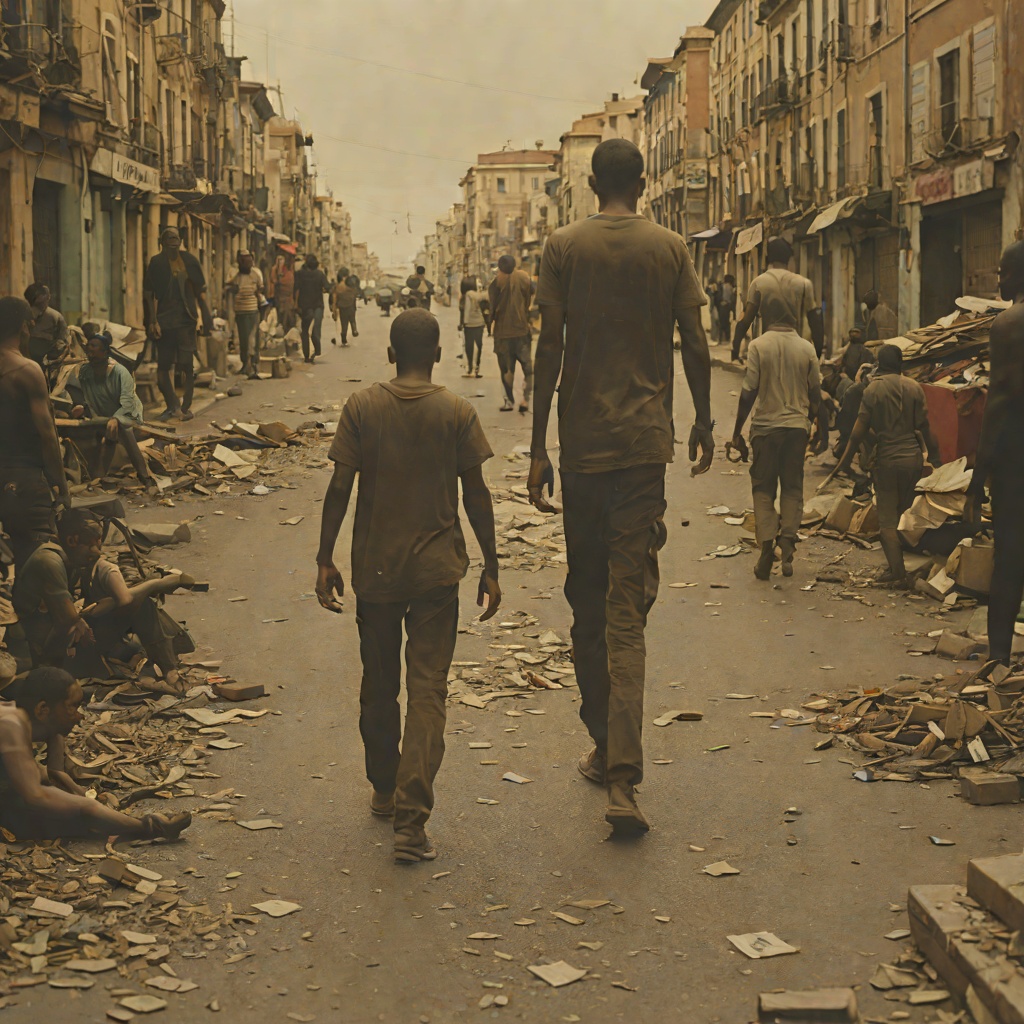
Violence then spreads laterally through the crowd. A small boy throws a rock at the back of a police officer’s head, drawing blood and prompting several officers to carry him away. Small fistfights break out between well-dressed townspeople and poorer slum-dwellers. A woman in a ripped housedress attacks a plump matron, and the two roll on the road kicking and screaming. The scene shows civil unrest as a fractured class conflict: anger is directed at the police, but also displaced onto neighboring civilians whose clothing and status mark them as representatives of unequal lives.
Containment, Spectacle, and Consequence
The society’s principal response to unrest is not reform but containment and conversion into media. The Games are presented as the largest program on Free-Vee, with opportunities for viewer participation that are both vicarious and actual. Dan Killian, its executive producer, describes the program as a way for the Network to remove embryo troublemakers such as Ben Richards. The Running Man transforms social antagonism into a competition whose rules make death appear voluntary and entertaining.
Its financial structure sharpens the coercion. Ben Richards, or his surviving family, is promised one hundred New Dollars for every hour he remains free, with forty-eight hundred dollars supplied as running money on the assumption that he can evade the Hunters for forty-eight hours. He receives a twelve-hour head start; surviving thirty days brings a one-billion-New-Dollar grand prize. The enormous reward is set against his daughter’s illness, his family’s hunger, and his lack of work, making the apparent choice to participate inseparable from the material conditions that force it.
The same logic governs the handling of large-scale catastrophe. The Games’ final spectacle culminates when a Lockheed aircraft, traveling at slightly over five hundred miles per hour with more than a quarter-full fuel supply, strikes the Games Building three quarters of the way up. The explosion lights the night and rains fire twenty blocks away. This ending fuses civil unrest with the institutions that have attempted to manage it: the entertainment structure does not resolve social anger but becomes its target, and the spectacle of control is destroyed by the violence it has cultivated.
Narrative Significance
Civil unrest functions as the novel’s collective counter-image to the isolated individual. Ben Richards initially experiences deprivation as a family emergency and unemployment as a personal failure, but Bradley Throckmorton’s account links those experiences to pollution, class power, and state decisions. The street confrontation makes that connection visible, even though the crowd lacks a unified program and quickly turns on itself.
The novel’s central pattern is therefore cumulative rather than spontaneous. Illness is hidden in medical statistics, pollution is normalized as daily air, hunger is disguised as a Games opportunity, protest is answered with police weapons, and news is physically destroyed when it threatens the official account. Yet none of these measures removes the underlying causes. Civil unrest is the moment when suppressed facts become bodily action: a shouted accusation, a smashed camera, a child’s thrown rock, a fistfight, and finally a catastrophic attack on the building that packages social misery as entertainment.